

About Pū’iwa
What is Pū’iwa?
Pū’iwa Farms Hawaiʻi was founded to produce the highest quality and supply of all Hawaiian ‘awa cultivars. Hawaiian ‘awa, better known around the world as kava, is a plant whose roots are used in traditional Melanesian and Polynesian societies to help bring people together through shared consumption.
The farm grew out of an idea in 2016, from a hundred plants and cuttings from Ed Johnston and the Association for Hawaiian ‘Awa. It carries on the legacy of Mike Munsell, the founder of Kalm with Kava.
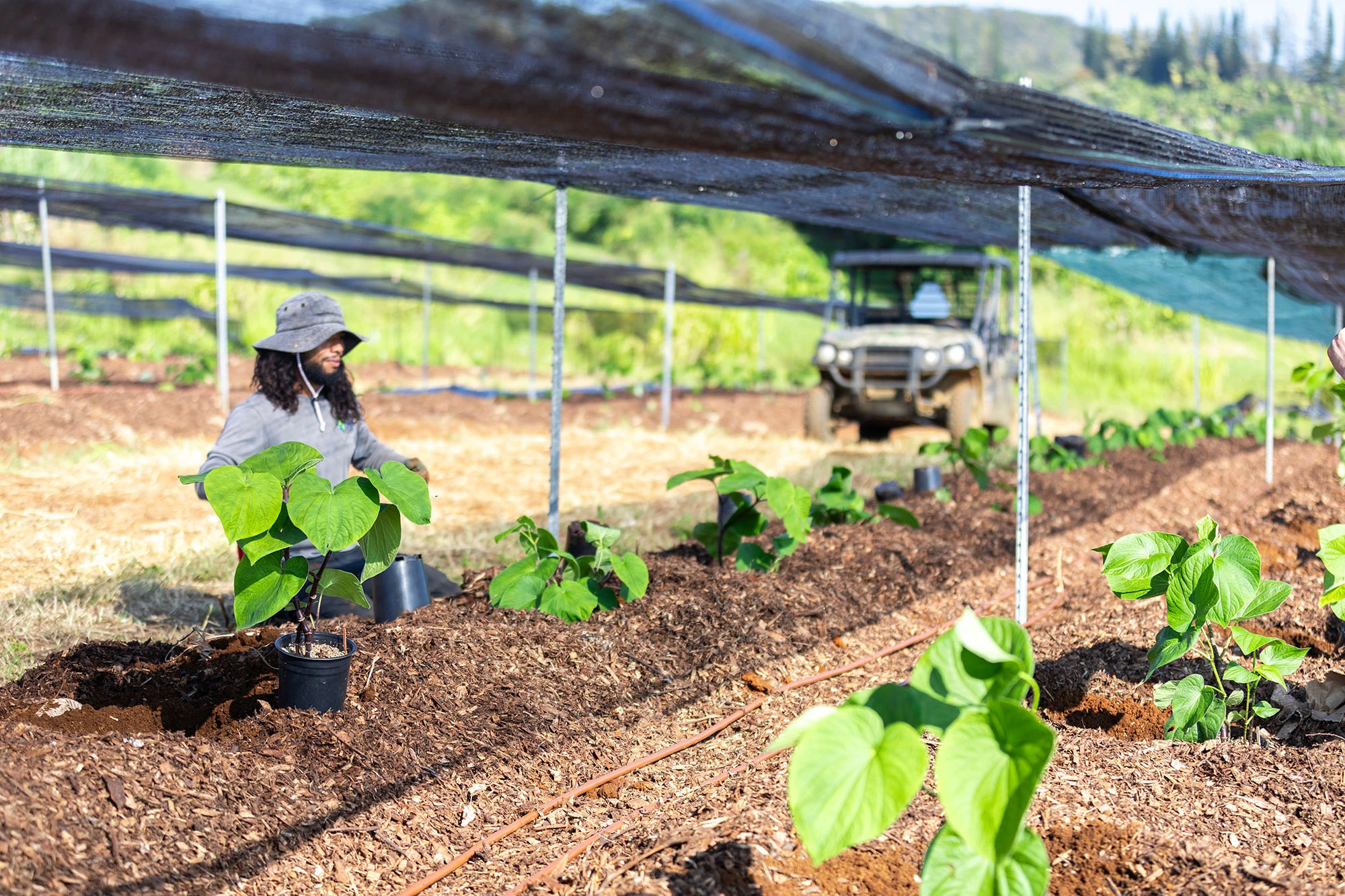
Hawaiian ‘awa cultivars kept growing
The year the idea took root
Plants and cuttings we started from
Our goals
Five things we are working toward, every single day.
Preserve the existing 13 Hawaiian ‘awa cultivars for future generations
Strengthen Hawaiʻi islands’ food security through growing kalo (taro)
Increase biodiversity within our ahupua’a by planting native and endemic species
Research the effectiveness of ‘awa in treating various forms of anxiety and sleep issues
Help people worldwide discover how ‘awa can be used to improve their relationships, quality of life, and peace of mind
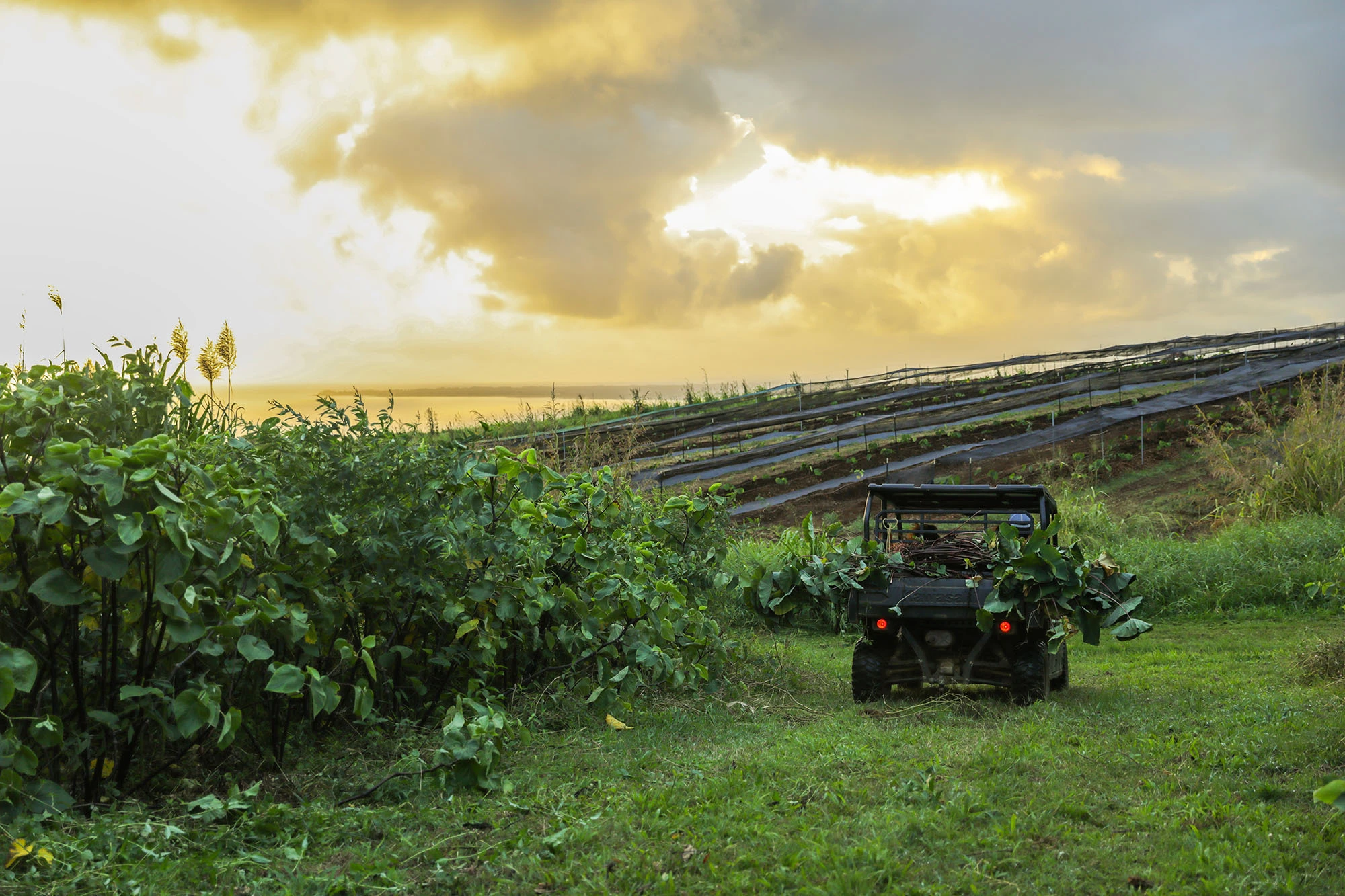
Thirteen cultivars,
one plant.
Pacific Islanders brought a few ‘awa cultivars from other islands for religious, cultural and medical reasons. Thirteen Hawaiian varieties have been used here for generations:
- HanakāpīʻaiLittle known fact: it’s also known as Uliuli a ʻōpulepule nohoʻi!
- Hiwa
- Honokāne Iki
- Kūmakua
- Mahakea
- Mapulehu
- Mōʻī
- Nēnē
- ʻOpihikao
- Panaʻewa
- Papa ʻEleʻele
- Papa ʻEleʻele Puʻupuʻu
- Papa Kea
We might be busy farming the next generation of Hawaiian ‘awa, but we’re always ready to help spread Aloha ʻĀina.